by Daniel Brouse
In Shakespeare’s Macbeth, Birnam Wood appears to come alive as Malcolm’s army cuts branches from the forest and carries them toward Dunsinane Castle, concealing its advance. What seemed like magic was actually an ingenious use of nature to solve a practical problem.
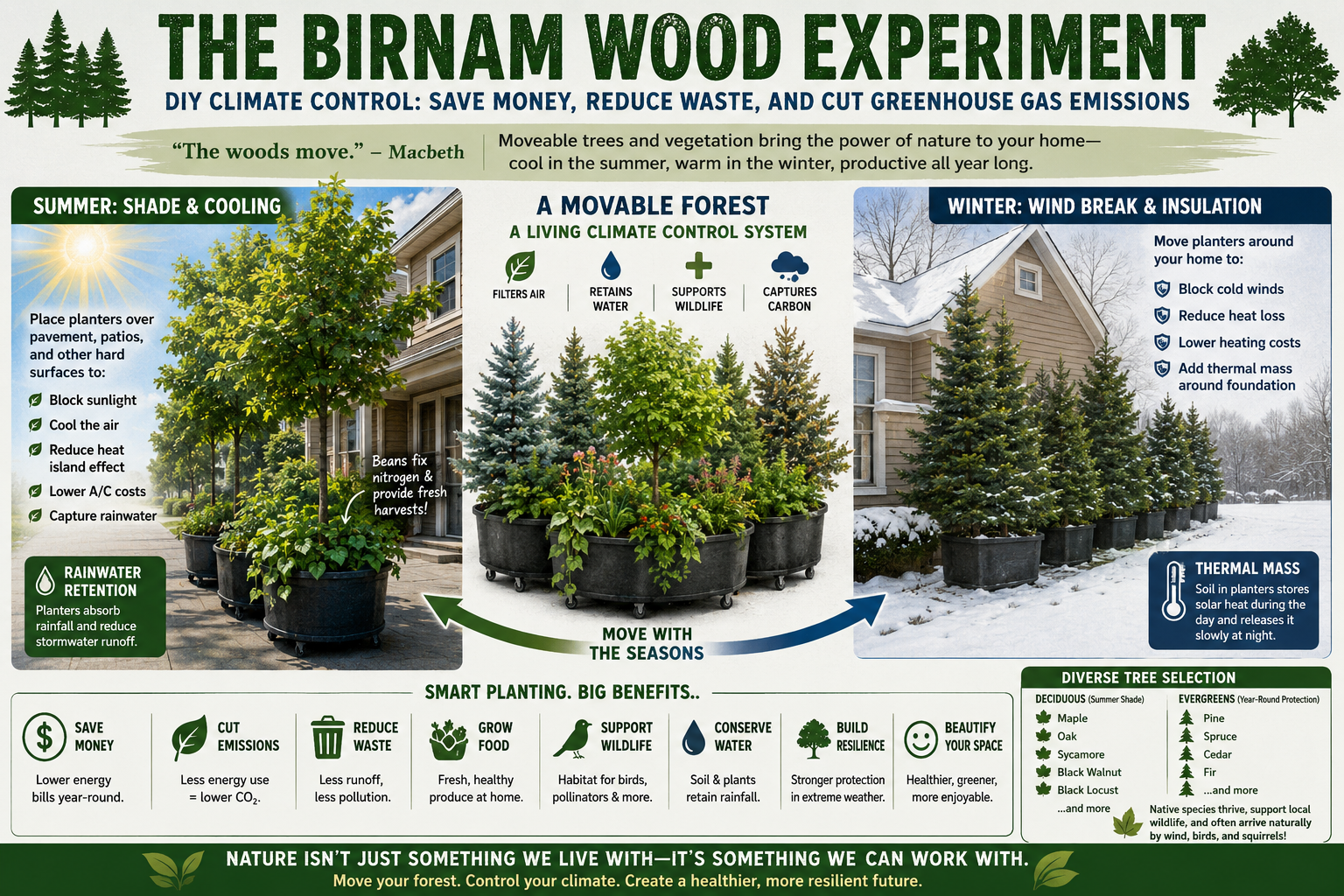
The Birnam Wood Experiment applies that same concept to climate resilience by using moveable trees and vegetation to improve home energy efficiency, reduce urban heat, harvest rainwater, provide food, and create healthier outdoor living spaces.
Rather than planting every tree permanently in the ground, many are grown in large mobile planters that can be repositioned throughout the year wherever they provide the greatest environmental and economic benefit.
Unlike traditional landscaping, movable planters allow homeowners to adapt their landscape to changing seasons and weather conditions.
The planters serve multiple purposes:
Instead of relying entirely on mechanical heating and cooling, the landscape itself becomes part of the home’s climate-control system.
Large containers are planted with a mixture of trees, companion plants, and climbing vegetables.
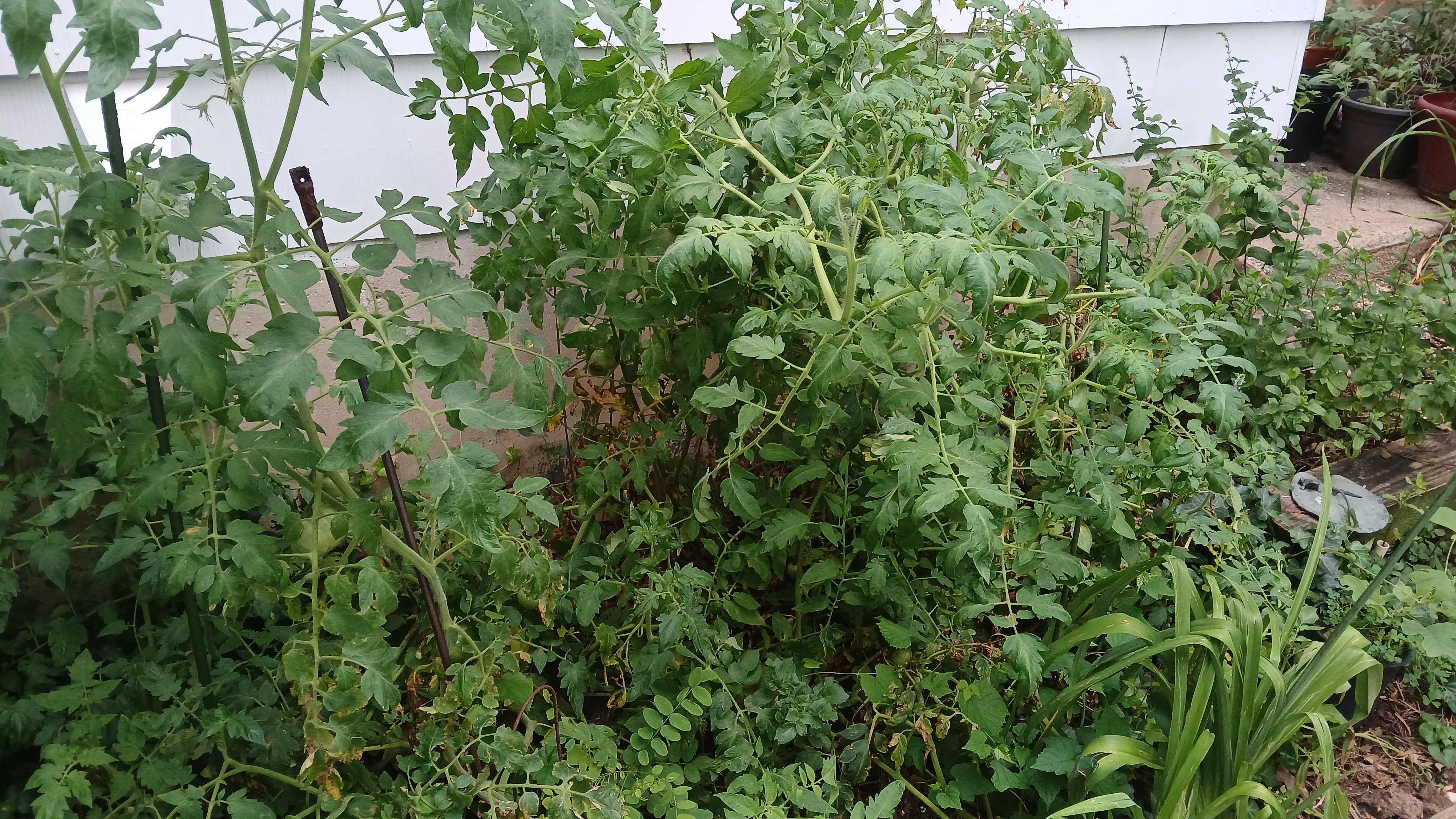
Beans are especially valuable because they naturally fix nitrogen in the soil through symbiotic bacteria living on their roots. This reduces fertilizer requirements while producing a fresh harvest throughout the growing season.
Other vegetables, herbs, flowers, and pollinator-friendly plants can also be incorporated depending on the available space.
A diverse mixture of trees provides the greatest resilience.
Both deciduous and evergreen (conifer) species should be included whenever practical.
Deciduous trees provide:
Evergreens provide:
Whenever possible, native species should be prioritized because they support local wildlife, require less maintenance, and are naturally adapted to regional conditions.
Nature often contributes to the experiment as well. Birds, squirrels, and the wind frequently plant volunteer seedlings that can be transplanted into containers.
During the Pennsylvania experiment, naturally occurring species included:
Additional conifer species were intentionally planted to maintain year-round coverage and maximize winter protection.
During the hottest months, the containers are positioned over driveways, sidewalks, patios, parking areas, and other impervious surfaces.
These surfaces normally absorb enormous amounts of solar radiation before reradiating heat back into the surrounding air.
The movable trees interrupt this process by:
Even modest reductions in surrounding temperatures can decrease air-conditioning demand while making outdoor spaces significantly more comfortable.
The planters also capture rainfall that would otherwise become runoff, allowing water to infiltrate the soil where it supports plant growth and evaporative cooling.
As temperatures fall, the same planters are relocated around the home’s foundation and along prevailing wind directions.
Rows of evergreens create effective windbreaks that reduce wind speed before it reaches exterior walls.
Reducing wind exposure decreases convective heat loss from the building envelope, helping the home retain warmth while lowering heating costs.
The large soil volumes inside the containers also function as thermal mass. During sunny winter days, the soil absorbs solar energy and slowly releases heat after sunset, moderating temperature fluctuations around the foundation.
The Birnam Wood Experiment demonstrates that landscaping can become an active component of home energy management rather than simply decoration.
Each planter performs multiple functions simultaneously:
This multifunctional approach maximizes the return on every square foot of landscape.
Trees provide some of the most cost-effective climate solutions available to homeowners.
A well-designed mobile forest can help:
Because the trees can be repositioned as conditions change, the system remains flexible and can evolve as the landscape matures.
Unlike many home improvements that slowly depreciate, healthy trees generally become more valuable over time. As they grow, they provide greater shade, stronger wind protection, increased carbon storage, more wildlife habitat, and larger harvests where edible species are included.
The Birnam Wood Experiment illustrates an important principle of climate adaptation: nature can be engineered to work alongside modern technology rather than replacing it. By treating trees as movable infrastructure instead of fixed landscape features, homeowners can create a dynamic, low-cost climate control system that saves money, reduces waste, strengthens local ecosystems, and lowers greenhouse gas emissions—all while bringing a little of Shakespeare’s legendary Birnam Wood to life.
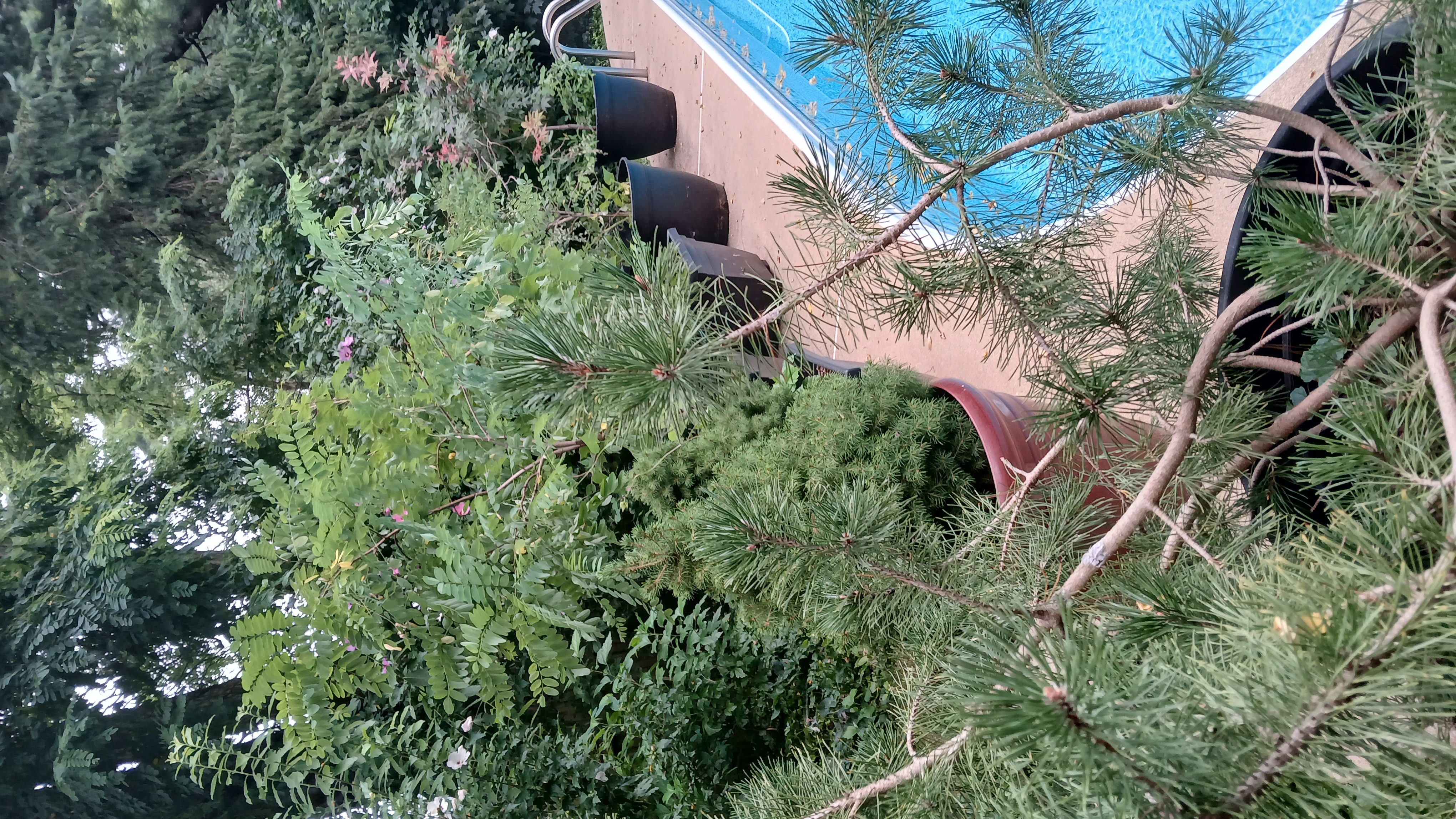
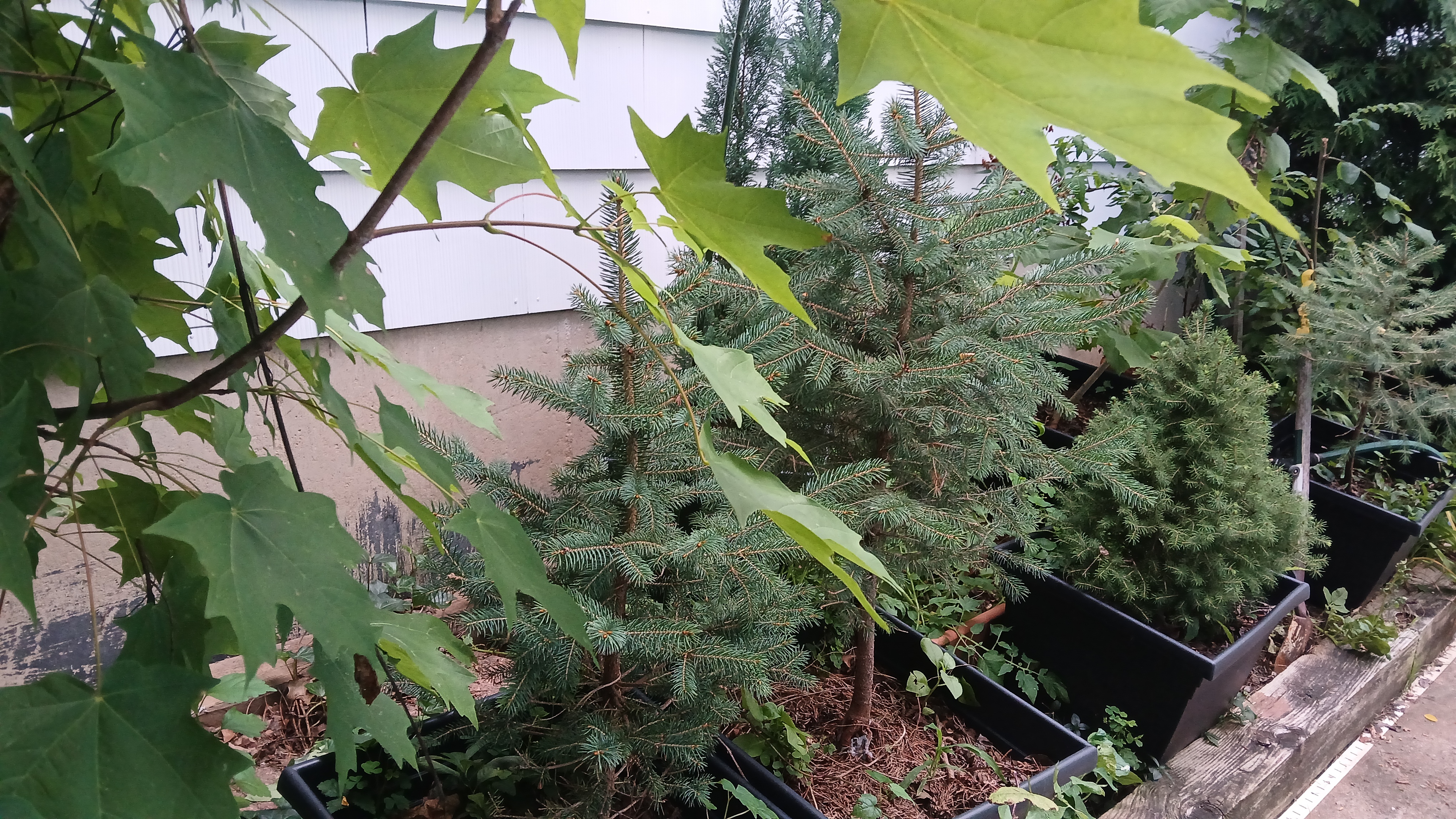
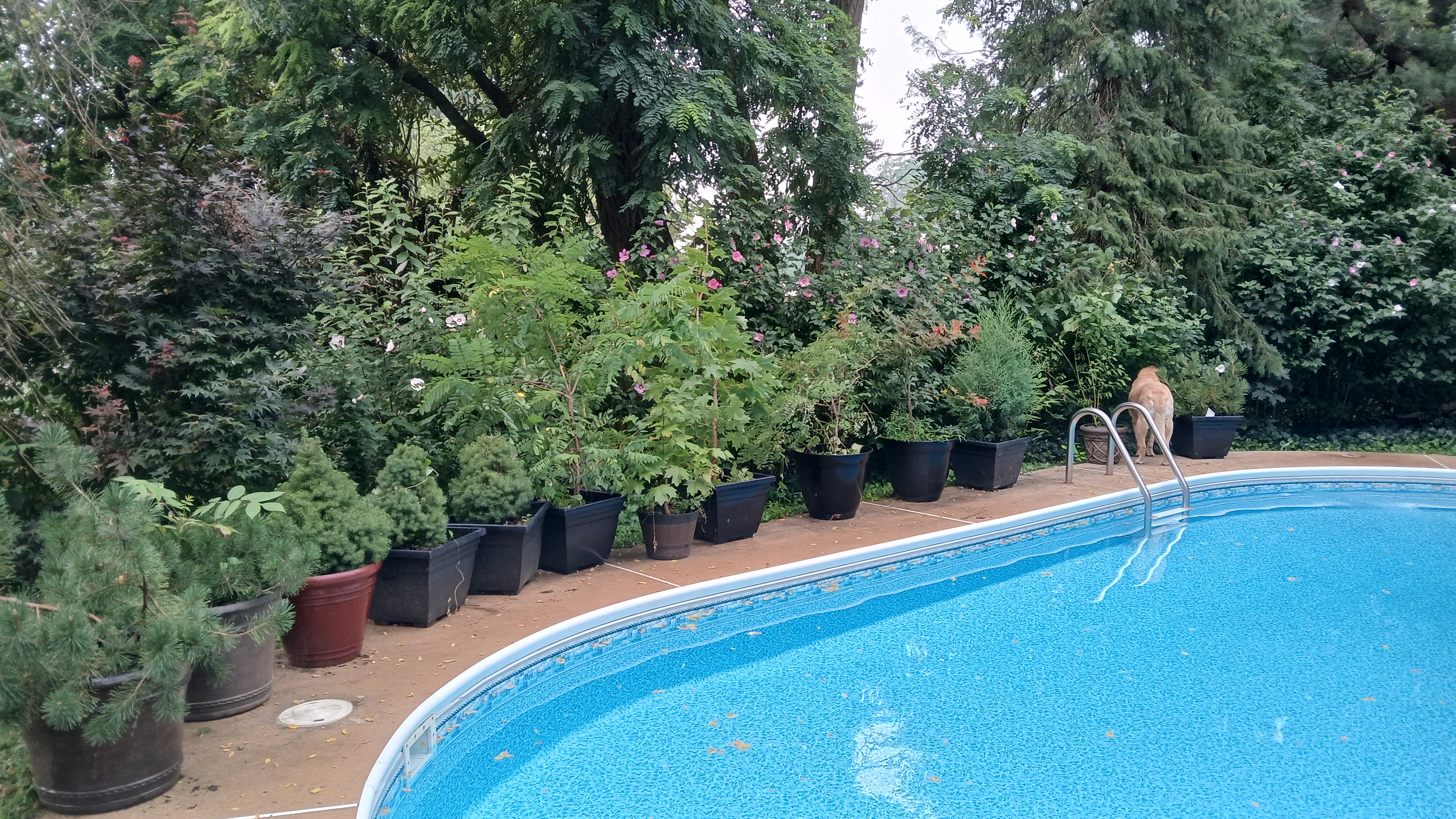
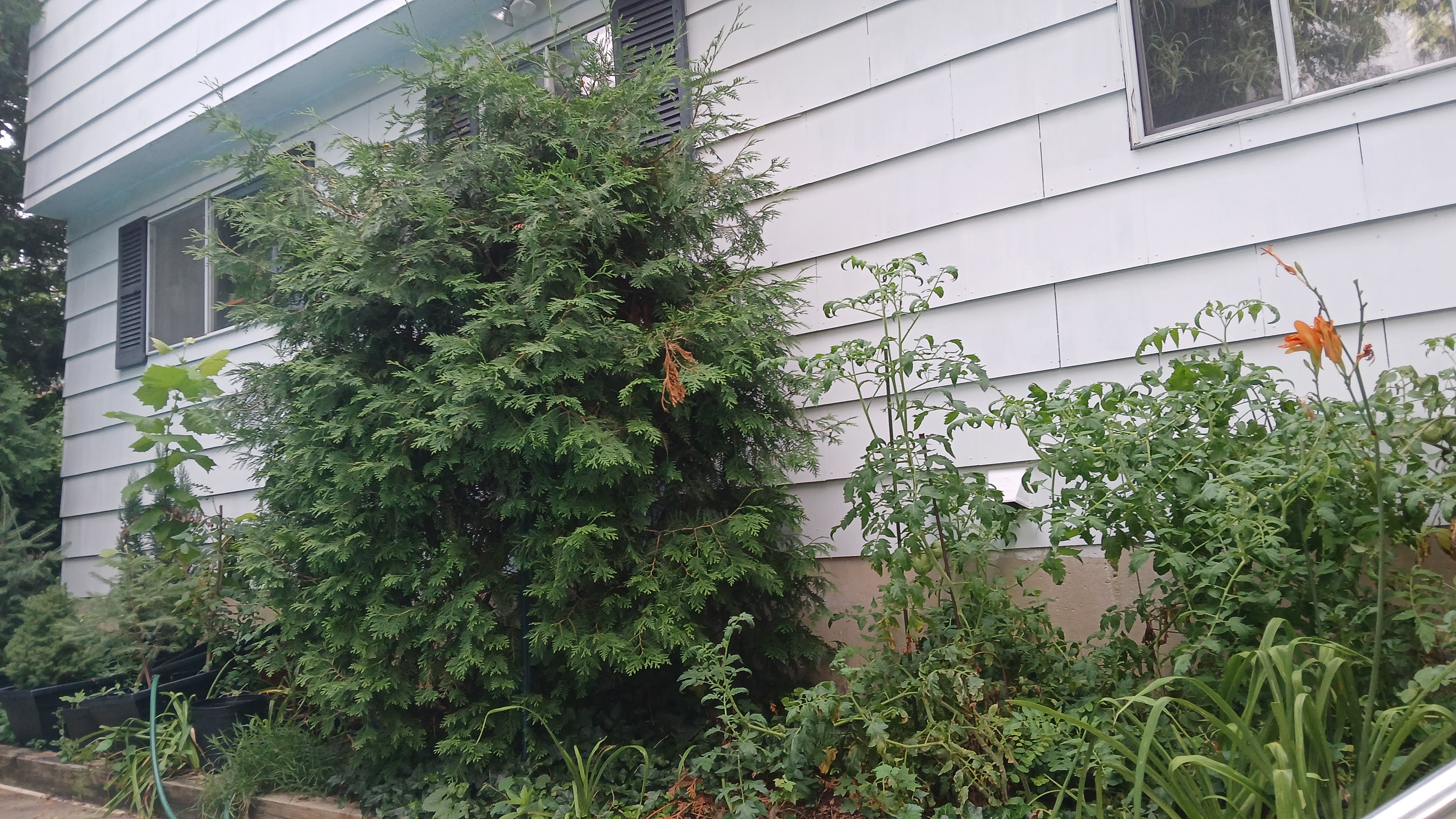
Birnam Wood is an ongoing real-world experiment that I have been conducting for several years to evaluate the practicality and effectiveness of low-cost, do-it-yourself climate control strategies using movable vegetation. The goal is to explore how plants, trees, and natural systems can be integrated into everyday spaces to improve comfort, support health and wellness, reduce energy consumption, manage heat, and enhance climate resilience.
While the concept has worked well in my home, results will vary depending on factors such as climate, sunlight exposure, water availability, plant selection, building design, and local growing conditions. Consider this project a flexible framework that can be adapted, tested, and improved to meet the unique conditions of your own environment.
One of the most important lessons I have learned is that plant selection and placement should change with the seasons. Summer strategies focus on maximizing shade, evapotranspiration, and cooling. Winter strategies shift toward maximizing wind protection, solar access, and natural insulation. A dynamic landscape can provide benefits throughout the year by responding to changing weather conditions.
During the summer, trees and large potted plants are moved onto patios, sidewalks, driveways, and other heat-absorbing surfaces. This provides multiple benefits: shading impervious surfaces reduces heat storage and helps mitigate the urban heat island effect; vegetation intercepts rainfall, slowing stormwater runoff; and transpiration from plants contributes to localized cooling. Vine crops such as tomatoes and beans are planted around the foundation, while additional plants—including mint, potatoes, herbs, and other productive species—are incorporated wherever space allows.
Like any experiment, Birnam Wood continues to evolve. I encourage readers to treat their own landscapes as living laboratories: test different plant combinations, measure results, document successes and failures, and share improvements. Through widespread experimentation and adaptation, simple nature-based solutions can become powerful tools for improving comfort, reducing costs, and building climate resilience.
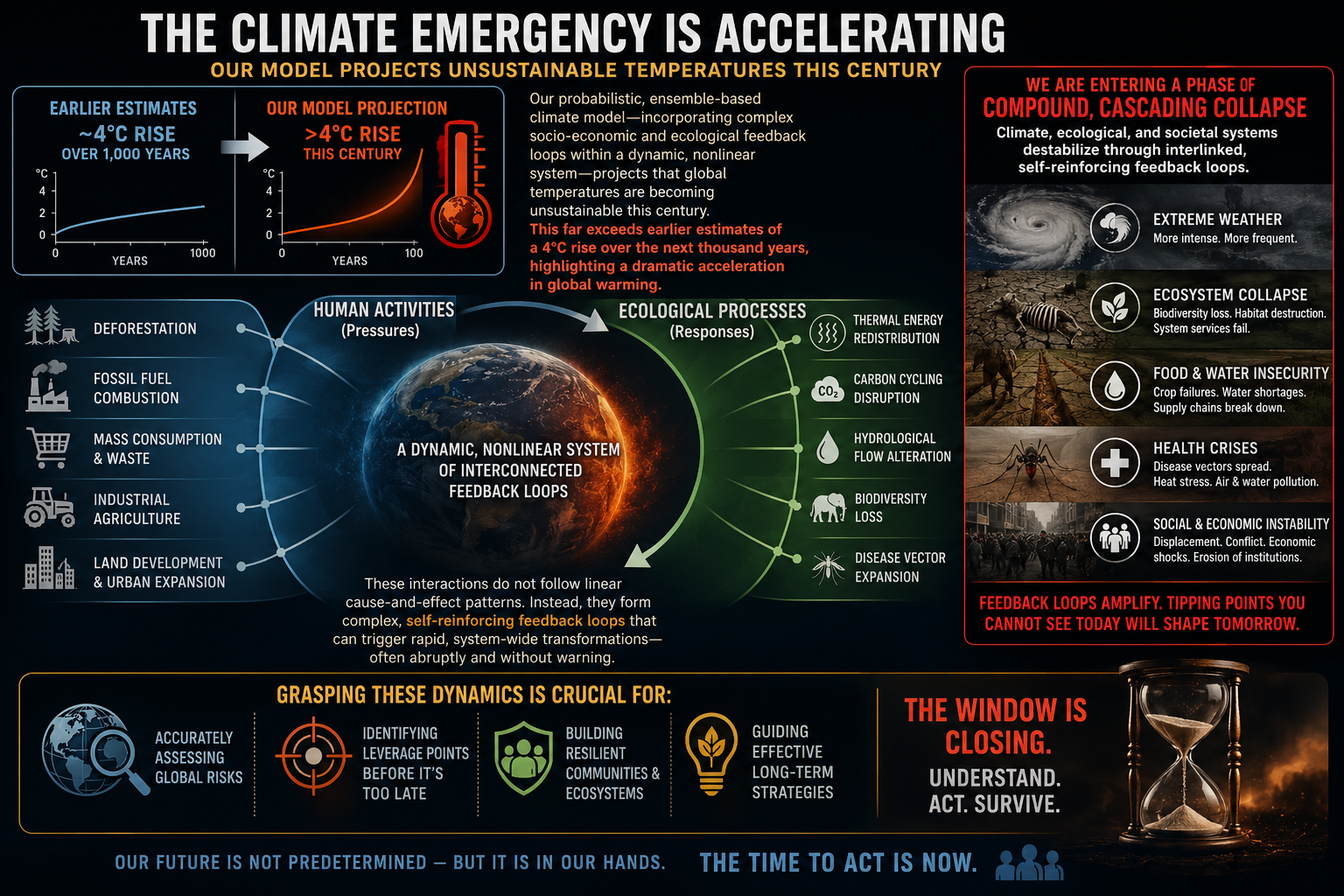
* Our probabilistic, ensemble-based climate model — which incorporates complex socio-economic and ecological feedback loops within a dynamic, nonlinear system — projects that global temperatures are becoming unsustainable this century. This far exceeds earlier estimates of a 4°C rise over the next thousand years, highlighting a dramatic acceleration in global warming. We are now entering a phase of compound, cascading collapse, where climate, ecological, and societal systems destabilize through interlinked, self-reinforcing feedback loops.
We examine how human activities — such as deforestation, fossil fuel combustion, mass consumption, industrial agriculture, and land development — interact with ecological processes like thermal energy redistribution, carbon cycling, hydrological flow, biodiversity loss, and the spread of disease vectors. These interactions do not follow linear cause-and-effect patterns. Instead, they form complex, self-reinforcing feedback loops that can trigger rapid, system-wide transformations — often abruptly and without warning. Grasping these dynamics is crucial for accurately assessing global risks and developing effective strategies for long-term survival.
Feedback Loops →
Tipping Points →
Acceleration →
Domino Effect
Feedback loops amplify climate change and can push interconnected Earth systems past critical tipping points. As tipping points are crossed, they can trigger additional feedback loops and destabilize other climate systems. This cascading "Domino Effect" compresses timescales, accelerates change, and increases the risk of rapid, nonlinear climate transformations.
Bottom line: The question is no longer how warm the planet becomes, but how life on Earth can endure when change outpaces our ability to adapt.
We cannot control the laws of physics, but we can control our pollution. The most effective action is to stop burning fossil fuels.