by Daniel Brouse
July 2026
Climate change is no longer simply an environmental issue. It has become an economic force that influences nearly every aspect of household finances. Extreme weather, rising insurance losses, damaged infrastructure, disruptions to agriculture, and increasing energy demand are reshaping the cost of living.
While the overall inflation rate captures broad price changes across the economy, climate change increasingly creates uneven inflation. Some goods remain relatively stable, while climate-sensitive sectors experience much faster price growth.
Understanding these trends allows households to better prepare for an increasingly volatile financial future.
The Consumer Price Index for All Urban Consumers (CPI-U) currently reflects annual inflation of approximately 3.5%.
Although this represents moderate overall inflation, it masks significant differences among individual household expenses. Energy, insurance, housing, and weather-sensitive goods continue to experience above-average price increases, while wages have largely kept pace only with headline inflation.
As climate change intensifies, these differences are expected to become even more pronounced.
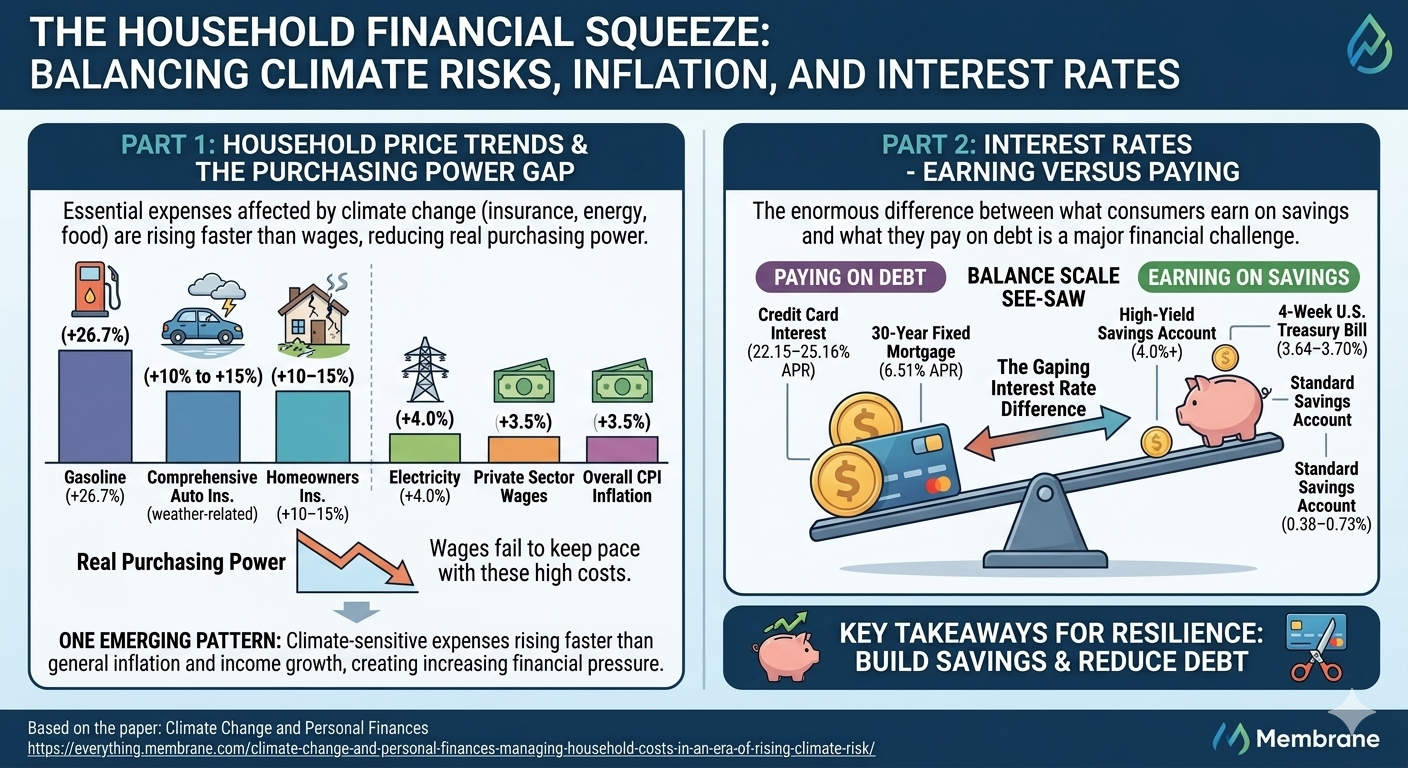
Major components of household budgets are experiencing dramatically different rates of inflation. Essential expenses increasingly affected by climate change—such as insurance, energy, housing repairs, and food—are rising faster than average wage gains. As a result, many households are experiencing a decline in real purchasing power despite wages keeping pace with headline inflation.
| Household Expense | Annual Change |
|---|---|
| Overall CPI Inflation | +3.5% |
| Gasoline | +26.7% |
| Electricity | +4.0% |
| Comprehensive Auto Insurance (weather-related losses) | +10% to +15% |
| Homeowners Insurance | +10–15% |
| Private Sector Wages | +3.5% |
One consistent pattern is emerging:
One consistent pattern is emerging: climate-sensitive expenses are rising faster than overall inflation and household income growth, creating increasing financial pressure for families adapting to a changing climate.
Energy remains one of the largest sources of household inflation.
Gasoline prices have risen sharply due to geopolitical tensions, supply disruptions, refinery constraints, and transportation bottlenecks. While climate change is not the sole cause of gasoline inflation, extreme weather increasingly disrupts oil production, refining capacity, pipelines, and shipping routes.
Electricity prices have also continued to climb.
Several factors contribute:
As summers become hotter and heat waves last longer, residential electricity demand for air conditioning continues to increase.
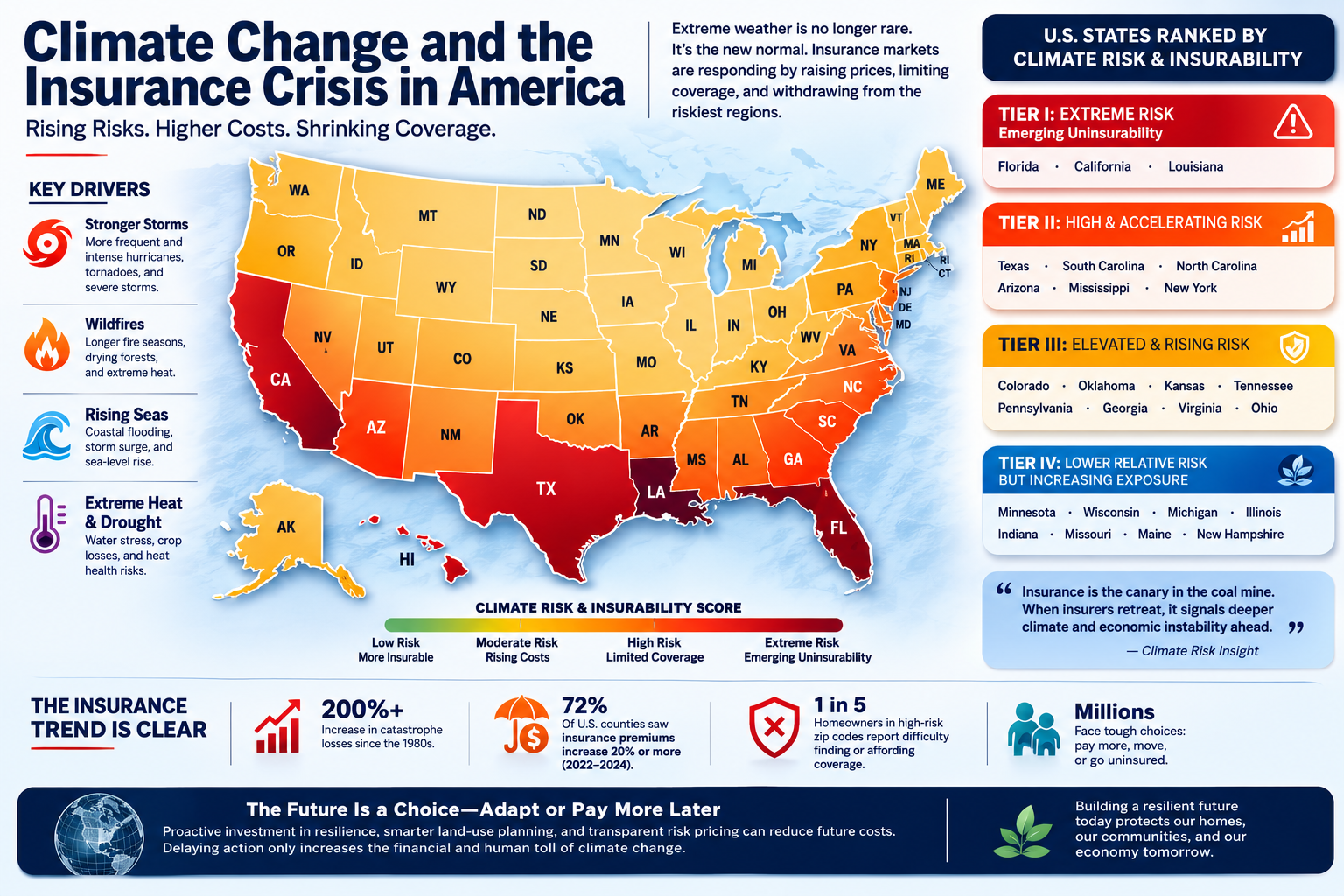
Perhaps no household expense illustrates climate change more clearly than insurance.
Insurers base premiums on expected future losses—not past averages.
As hurricanes, wildfires, hailstorms, tornadoes, flooding, and severe convective storms become more destructive, insurance companies are paying record claims.
These losses eventually appear as:
Homeowners insurance has become one of the fastest-growing household expenses in many regions.
In some states, premiums have doubled within only a few years.
For households, insurance is increasingly becoming a direct monthly cost of climate change.
Unlike collision insurance, which covers accidents between vehicles, comprehensive automobile insurance protects against damage caused by natural hazards and other non-collision events. As climate change increases the frequency and severity of extreme weather, comprehensive claims have risen substantially.
Common climate-related comprehensive claims include:
Large hailstorms alone now produce billions of dollars in insured vehicle losses each year. Modern vehicles are particularly vulnerable because aluminum body panels, panoramic glass roofs, advanced sensors, cameras, and radar systems are expensive to repair or replace.
Flash flooding has also become one of the fastest-growing sources of comprehensive auto losses. Vehicles caught in flooded roadways often suffer catastrophic engine, electrical, and electronic damage, resulting in total-loss claims.
As insurers pay increasing numbers of weather-related claims, many companies have adjusted comprehensive premiums, increased deductibles, or refined risk models based on regional exposure to hail, flooding, hurricanes, wildfires, and severe convective storms.
While collision coverage is primarily influenced by driving behavior, repair costs, and accident frequency, comprehensive insurance increasingly reflects the financial consequences of a changing climate. For many households, the rising cost of comprehensive coverage has become another indirect expense associated with more frequent and more destructive extreme weather events.
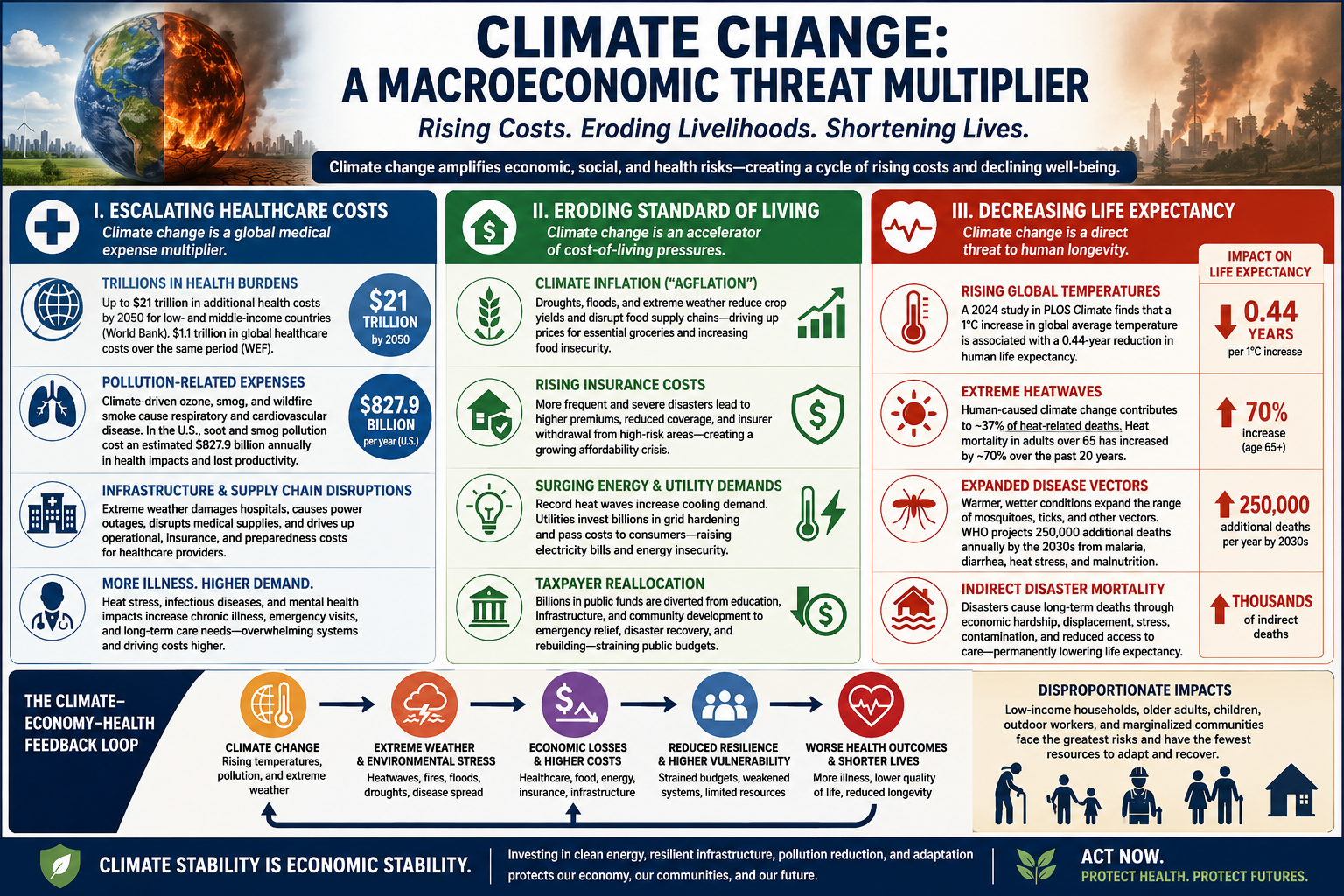
Climate change functions as a macroeconomic threat multiplier, amplifying healthcare costs, increasing living expenses, reducing productivity, and shortening life expectancy through interconnected environmental, economic, and public health impacts.
The economic consequences of climate change are increasingly visible through three interconnected pathways:
Although food inflation fluctuates from year to year, climate change is placing increasing pressure on agricultural production.
Extreme heat, drought, flooding, hurricanes, and shifting growing seasons reduce crop yields while increasing production costs.
Examples include:
The result is greater price volatility at grocery stores.
Consumers may increasingly experience periods where staple foods rise rapidly following major climate disasters.
Housing costs are increasingly influenced by climate risk.
Construction materials become more expensive following disasters.
Labor shortages emerge after major storms.
Building codes become stricter.
Flood-resistant construction, stronger roofing systems, improved insulation, and wildfire-resistant materials all increase upfront construction costs while reducing long-term risk.
Mortgage lenders are also beginning to incorporate climate risk into property valuations.
Properties facing repeated flooding, wildfire exposure, or coastal erosion may experience declining values while insurance costs continue rising.
Private-sector wages have increased approximately 3.5% over the past year.
While this roughly matches headline inflation, it does not fully offset the faster growth of essential household expenses such as insurance, electricity, housing, and healthcare.
As a result, many households experience “cost-of-living compression,” where income keeps pace with average inflation but fails to keep pace with the expenses that matter most.
One of the largest financial challenges facing households is the enormous difference between what consumers earn on savings and what they pay on debt.
| Financial Instrument | Typical Rate |
|---|---|
| Credit Card Interest | 22.15–25.16% APR |
| 30-Year Fixed Mortgage | 6.51% APR |
| High-Yield Savings Account | 4.0%+ |
| 4-Week U.S. Treasury Bill | 3.64–3.70% |
| Standard Savings Account | 0.38–0.73% |
The modern banking system rewards households that maintain liquidity while imposing extremely high costs on revolving debt.
Credit card interest rates frequently exceed 20%, making high-interest debt one of the largest obstacles to long-term financial security.
Conversely, households that maintain emergency savings can now earn meaningful returns through high-yield savings accounts and short-term Treasury securities.
Climate change introduces several new forms of financial risk that traditional household budgeting rarely considered:
These risks compound over time, making financial resilience increasingly important.
Households can take practical steps to reduce their financial vulnerability to climate-related economic shocks.
Maintaining three to six months of living expenses provides flexibility following disasters, temporary unemployment, or unexpected repairs.
Paying down credit cards earning 22–25% interest often provides a greater guaranteed return than most investments.
Investments in energy efficiency can provide one of the most practical ways for households to reduce both monthly expenses and greenhouse gas emissions. As extreme heat events become more frequent and electricity demand increases, improving the efficiency of homes and reducing energy waste can provide long-term financial benefits while improving comfort and resilience.
Cost-effective improvements include:
These upgrades can lower utility bills, reduce strain on the electrical grid during peak demand periods, and improve indoor comfort during heat waves and cold-weather extremes.
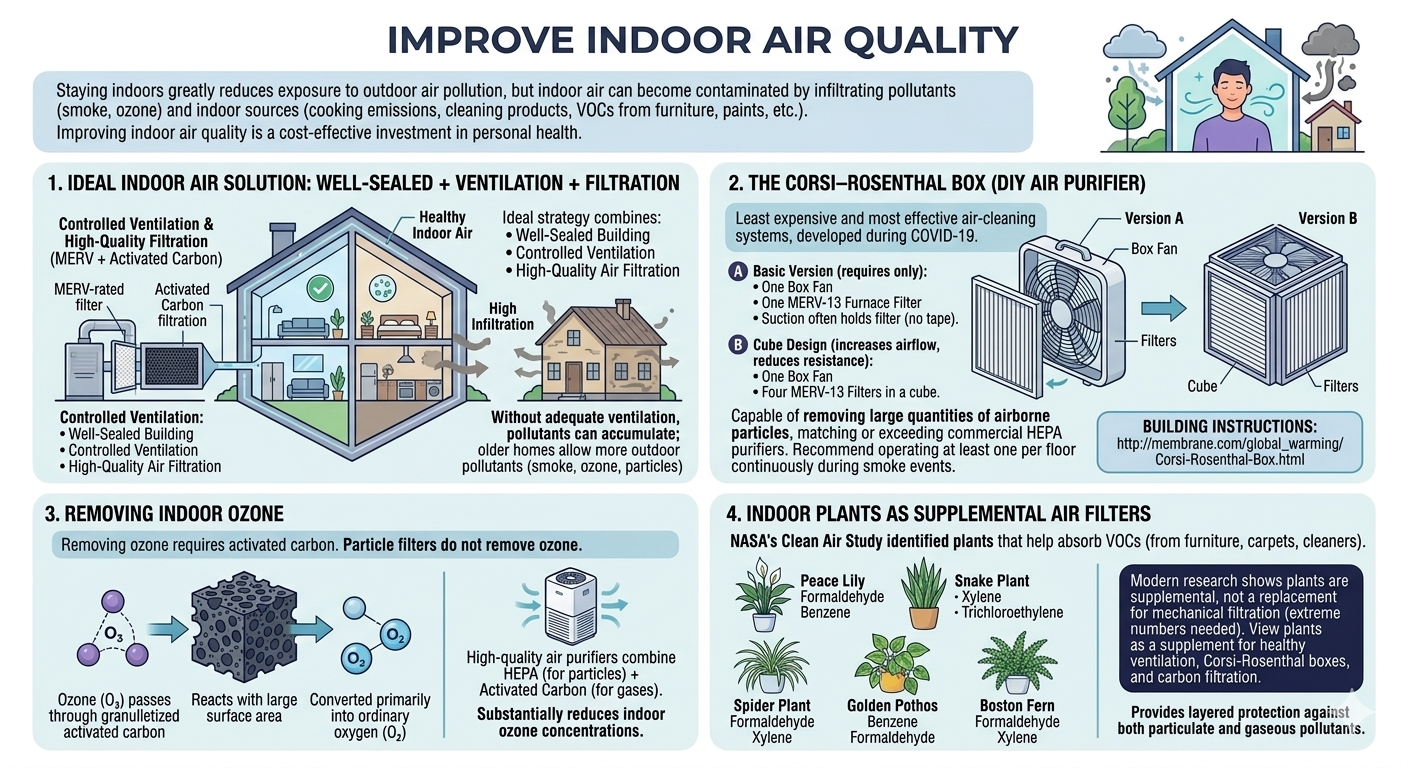
Climate resilience does not always require expensive investments. Low-cost solutions can also make a meaningful difference in reducing household expenses and improving indoor environmental quality.
One example is the Corsi–Rosenthal Box, a do-it-yourself air filtration system created by combining a box fan with high-efficiency air filters. These systems can significantly improve indoor air quality by reducing exposure to wildfire smoke, fine particulate matter (PM2.5), pollen, dust, and other airborne pollutants.
These systems are becoming increasingly valuable as climate change contributes to:
Unlike expensive air-cleaning systems, a Corsi–Rosenthal Box can be built using readily available materials at relatively low cost while providing an affordable way to improve indoor air quality.
Reducing energy waste and improving indoor environmental quality represent a rare combination of benefits:
As climate risks increase, energy efficiency is no longer simply a sustainability choice—it is becoming a financial strategy that helps households reduce costs while adapting to a changing climate.
Homeowners should regularly review policy limits, deductibles, exclusions, flood coverage, and replacement-cost estimates to ensure protection reflects today’s risks.
Diversification across asset classes, industries, and geographic regions can help reduce exposure to climate-related disruptions affecting any single sector.
Emergency supplies, backup power, important documents, evacuation plans, and home maintenance can reduce both financial losses and recovery time after disasters.
One of the defining economic realities of the coming decades will be the growing cost of adaptation.
Communities will invest billions in:
Although these investments require substantial upfront spending, they often cost far less than rebuilding after repeated disasters. For individual households, similar investments—such as reinforcing roofs, improving drainage, elevating utilities in flood-prone areas, or increasing home energy efficiency—can reduce future repair costs, lower insurance claims, and improve long-term resilience.
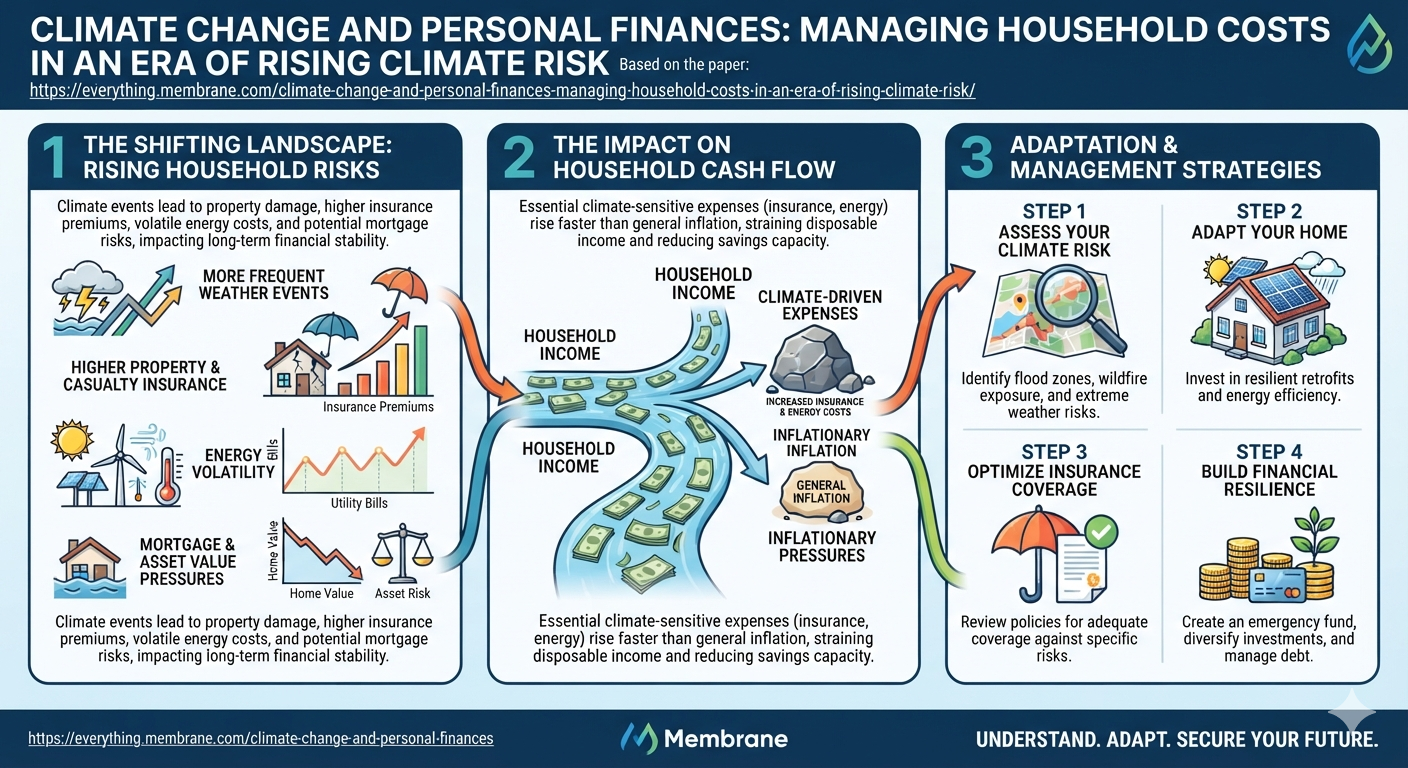
Climate change is increasingly shaping household finances through higher insurance premiums, rising energy costs, greater food-price volatility, and growing expenditures on disaster preparedness and infrastructure. At the same time, high borrowing costs amplify the financial strain on families carrying significant debt.
The central challenge is no longer simply inflation, but the uneven way inflation affects climate-sensitive expenses. Insurance, utilities, housing, and food are consuming a larger share of household budgets, even when overall inflation appears moderate.
Building emergency savings, reducing high-interest debt, investing in energy efficiency, maintaining appropriate insurance coverage, and preparing for extreme weather can strengthen financial resilience. As climate risks continue to evolve, households that proactively adapt their financial strategies will be better positioned to absorb future economic shocks and maintain long-term financial stability.
Bottom line: The question is no longer how warm the planet becomes, but how life on Earth can endure when change outpaces our ability to adapt.
We cannot control the laws of physics, but we can control our pollution. The most effective action is to stop burning fossil fuels.