by Daniel Brouse
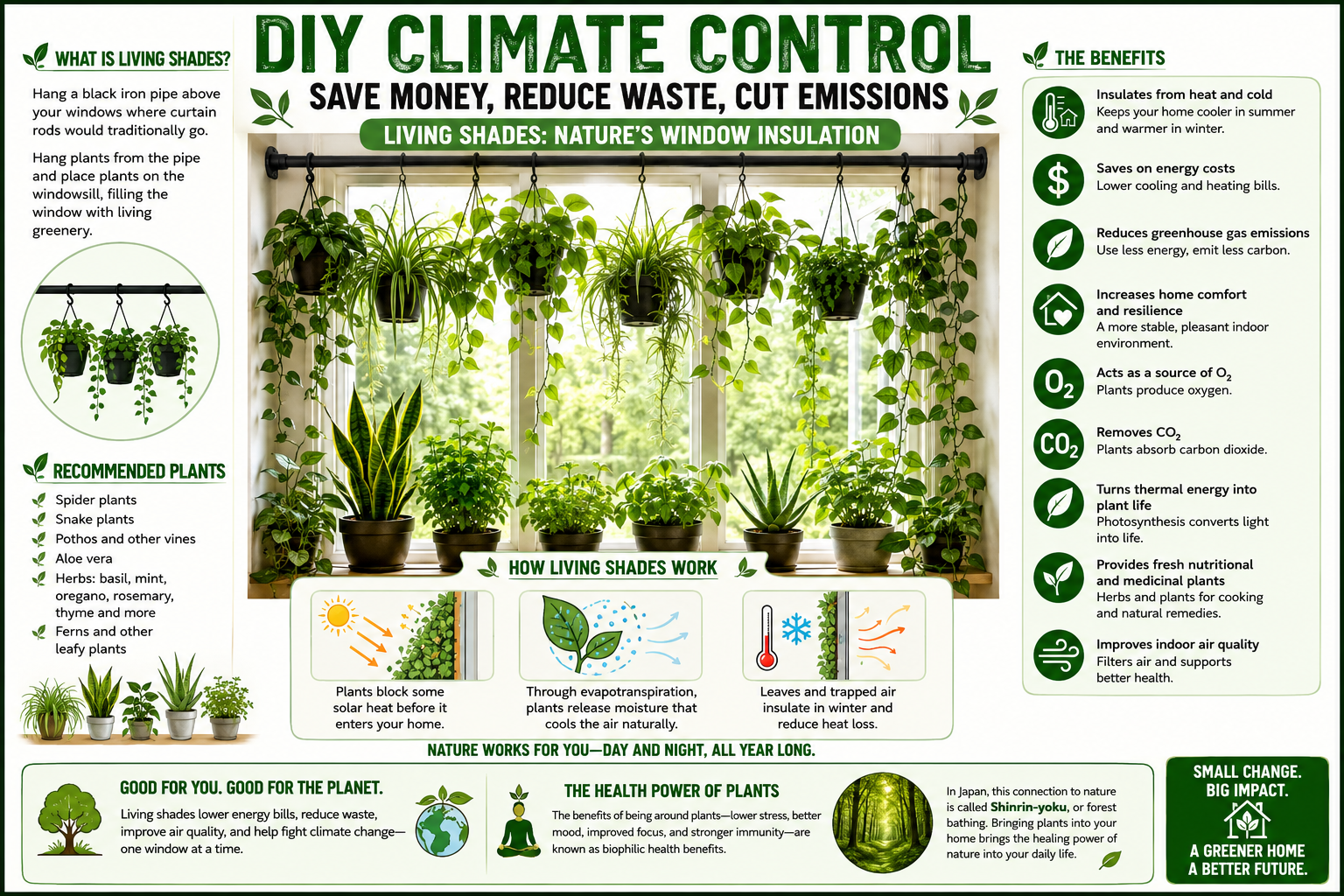
One of the simplest and most affordable ways to improve your home’s energy efficiency is to create living shades. Instead of installing traditional curtains or blinds, mount a sturdy black iron pipe above each window and suspend a collection of houseplants from it. Complement the hanging plants with additional plants on the windowsill, creating a dense layer of living vegetation between the window and the room.
A diverse mix of plants works best. Excellent choices include:
As the plants mature, they naturally form a living curtain that performs several useful functions simultaneously.
Plants intercept a portion of incoming solar radiation before it enters the room. Through evapotranspiration, they also release water vapor that provides localized evaporative cooling around windows. During winter, the layer of foliage and trapped air provides modest insulation that helps reduce heat loss.
Unlike synthetic window coverings, living shades continuously improve indoor environmental quality while producing no waste and requiring very little energy to operate.
Living shades can help:
While individual houseplants should not be viewed as major carbon sinks, a home filled with vegetation contributes to a healthier indoor ecosystem while reducing reliance on energy-intensive climate control.
The benefits of living plants extend beyond lower utility bills.
A growing body of research shows that exposure to vegetation can reduce stress, improve mood, enhance concentration, and promote psychological well-being. Collectively, these effects are known as biophilic health benefits, reflecting humanity’s innate connection to the natural world.
In Japan, the practice of intentionally immersing oneself in nature is known as Shinrin-yoku, or forest bathing. Research has shown that spending time around plants and trees can lower stress hormones, reduce blood pressure, improve immune function, and promote relaxation. While a living room cannot replace a forest, incorporating abundant indoor vegetation brings many of these restorative qualities into everyday life.
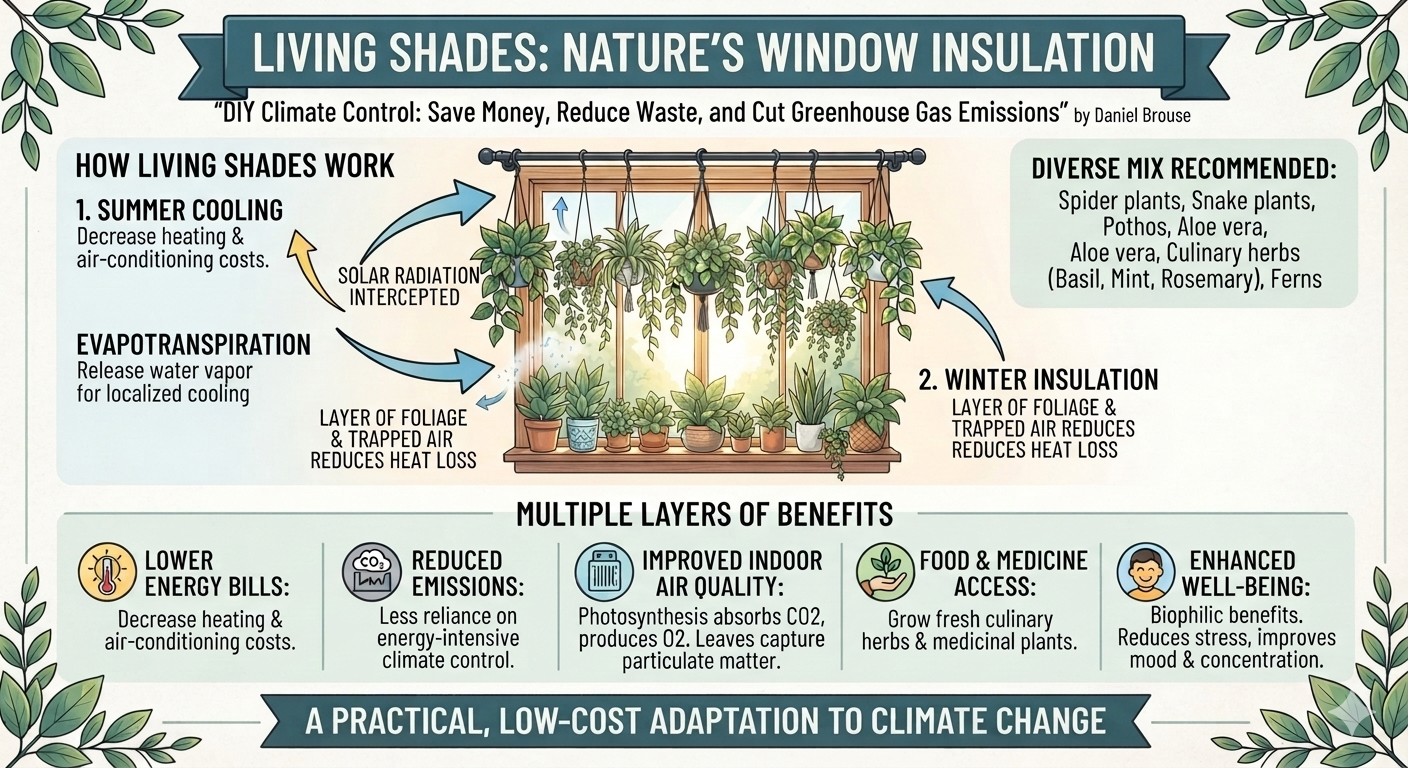
Living shades therefore provide multiple layers of value:
As climate change drives higher temperatures and rising energy costs, living shades represent a practical, low-cost adaptation strategy that transforms ordinary windows into productive, energy-saving ecosystems.
These photos were taken during the summer of 2026, when smoke from Canadian wildfires was affecting air quality across parts of the United States. The visible haze from the wildfire smoke can be seen outside the windows. As an added benefit, the plants in the Living Shades system help improve the indoor environment by acting as a natural air filter and contributing to cleaner, healthier indoor air.

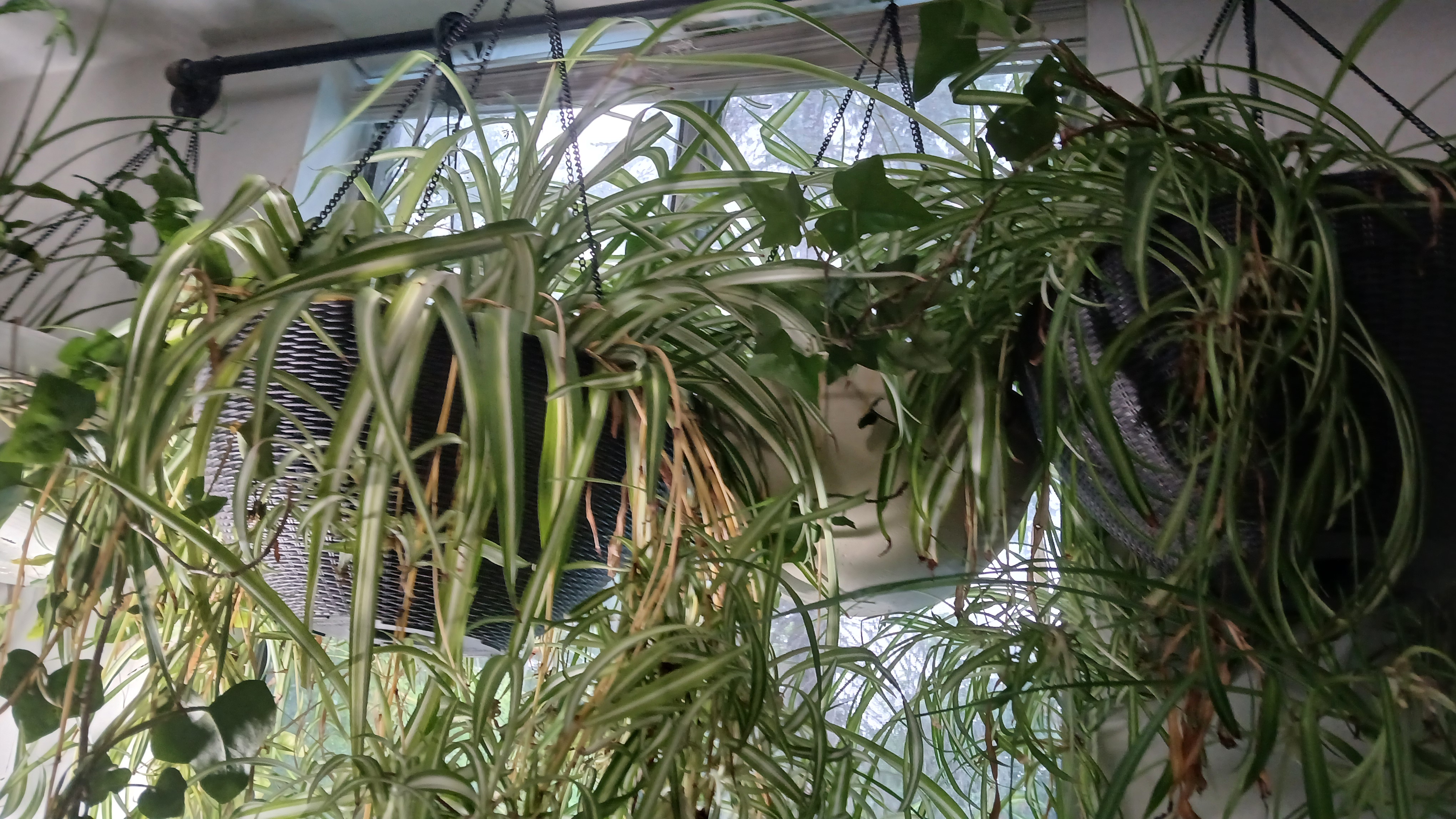
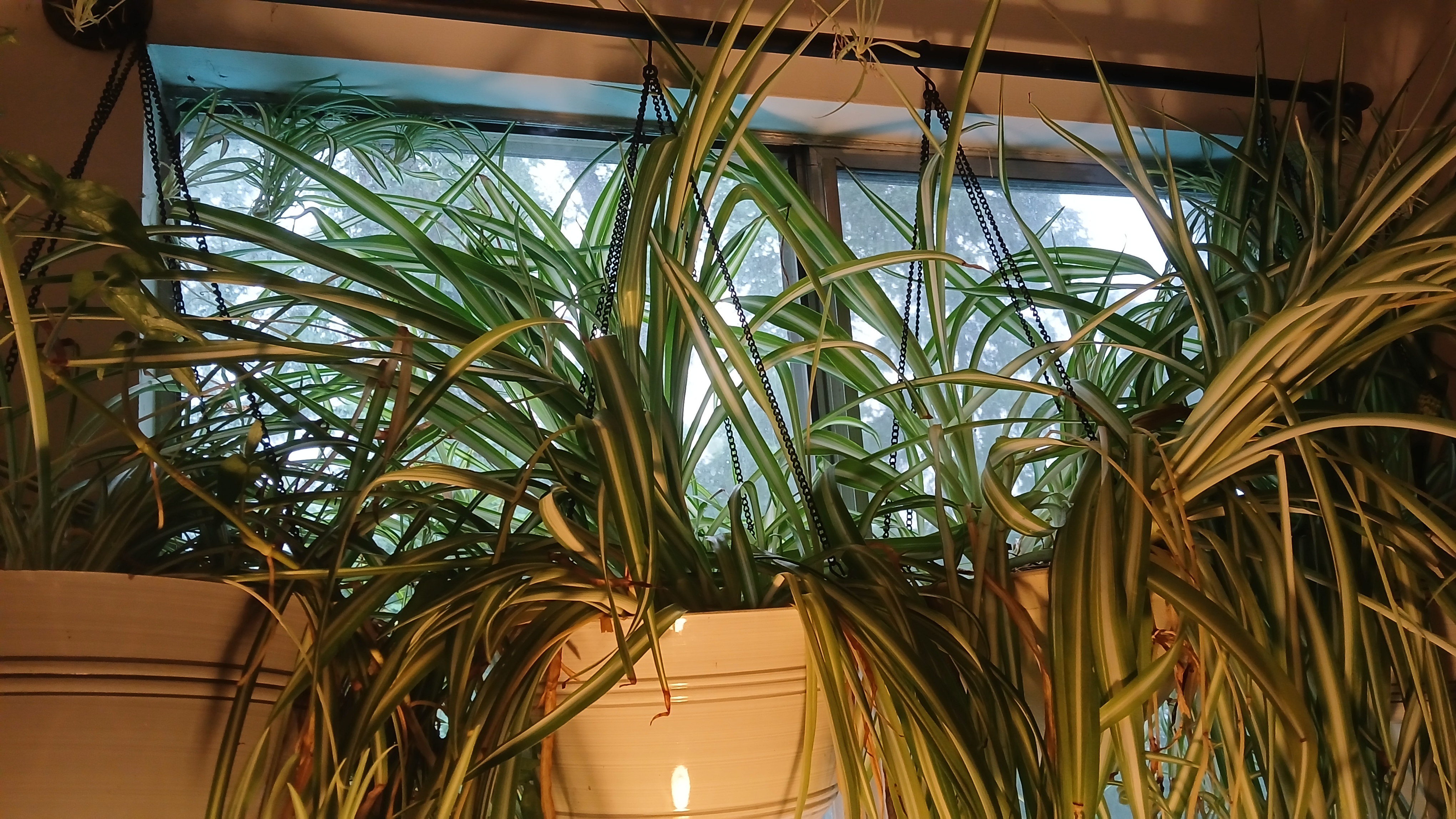
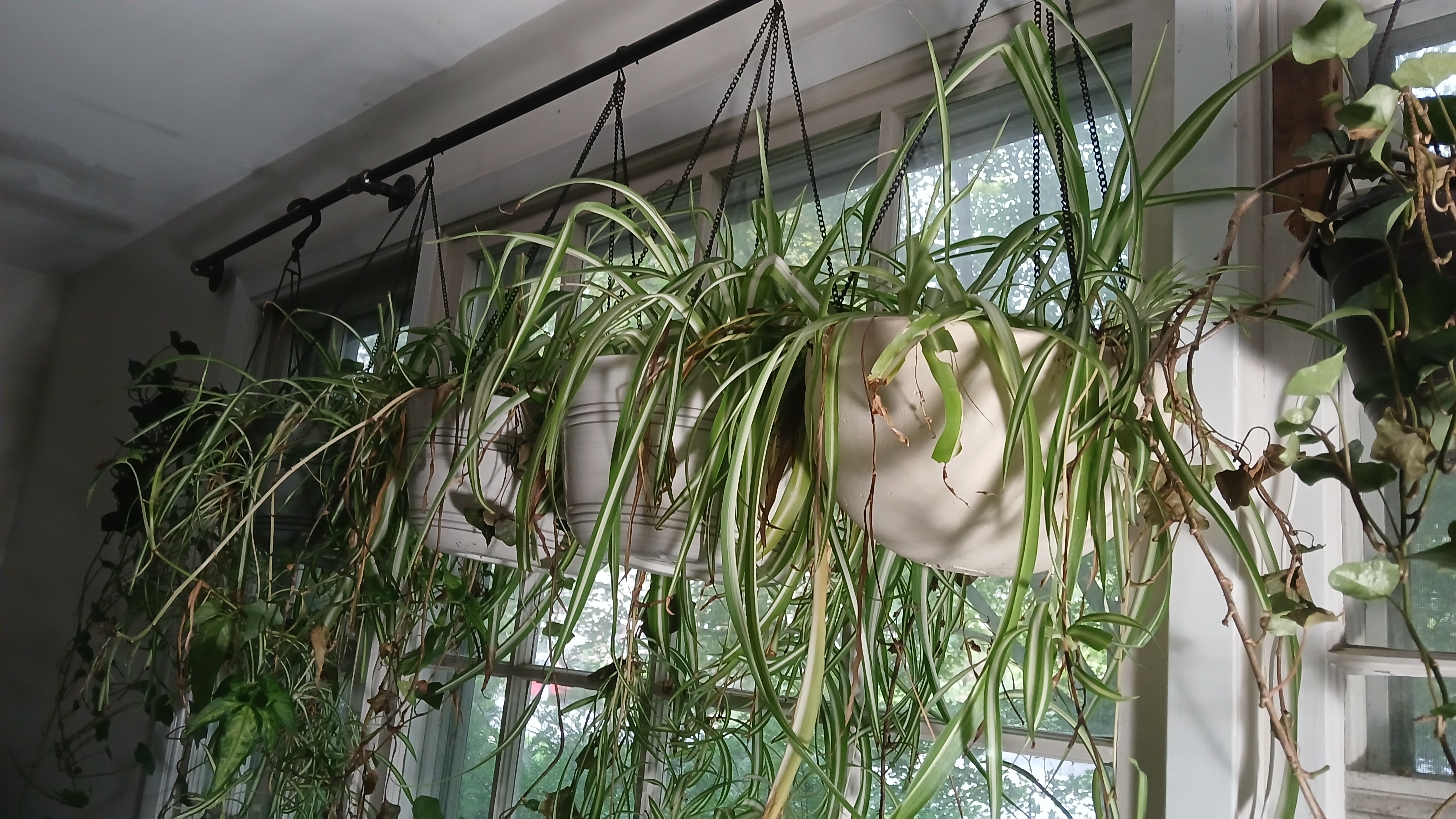
Living Shades is an ongoing experiment that I have been conducting for several years to evaluate both its practicality and effectiveness as a low-cost, do-it-yourself climate control system. The goal is to explore how plants and natural systems can be integrated into everyday spaces to improve comfort, support health and wellness, reduce energy consumption, manage heat, and enhance climate resilience. While the concept has worked well in my home, your results will depend on factors such as climate, window orientation, plant selection, and local growing conditions. Consider this project a framework that can be adapted and improved for your own environment.
One of the most important lessons I've learned is that plant selection—and even plant placement—should change with the seasons. Most vines, spider plants, and rosemary perform well year-round, while basil and aloe vera tend to struggle during the winter months. Throughout the year, I rearrange the plants to optimize shade, insulation, natural light, airflow, and the view from the window.
The system is also supplemented with traditional insulation when needed. On exceptionally hot, sunny days, I lower mini blinds behind the plants to provide additional shade and reduce solar heat gain. During extremely cold winter nights, I cover the entire window and plant arrangement with large quilts, creating an extra insulating layer that helps reduce heat loss.
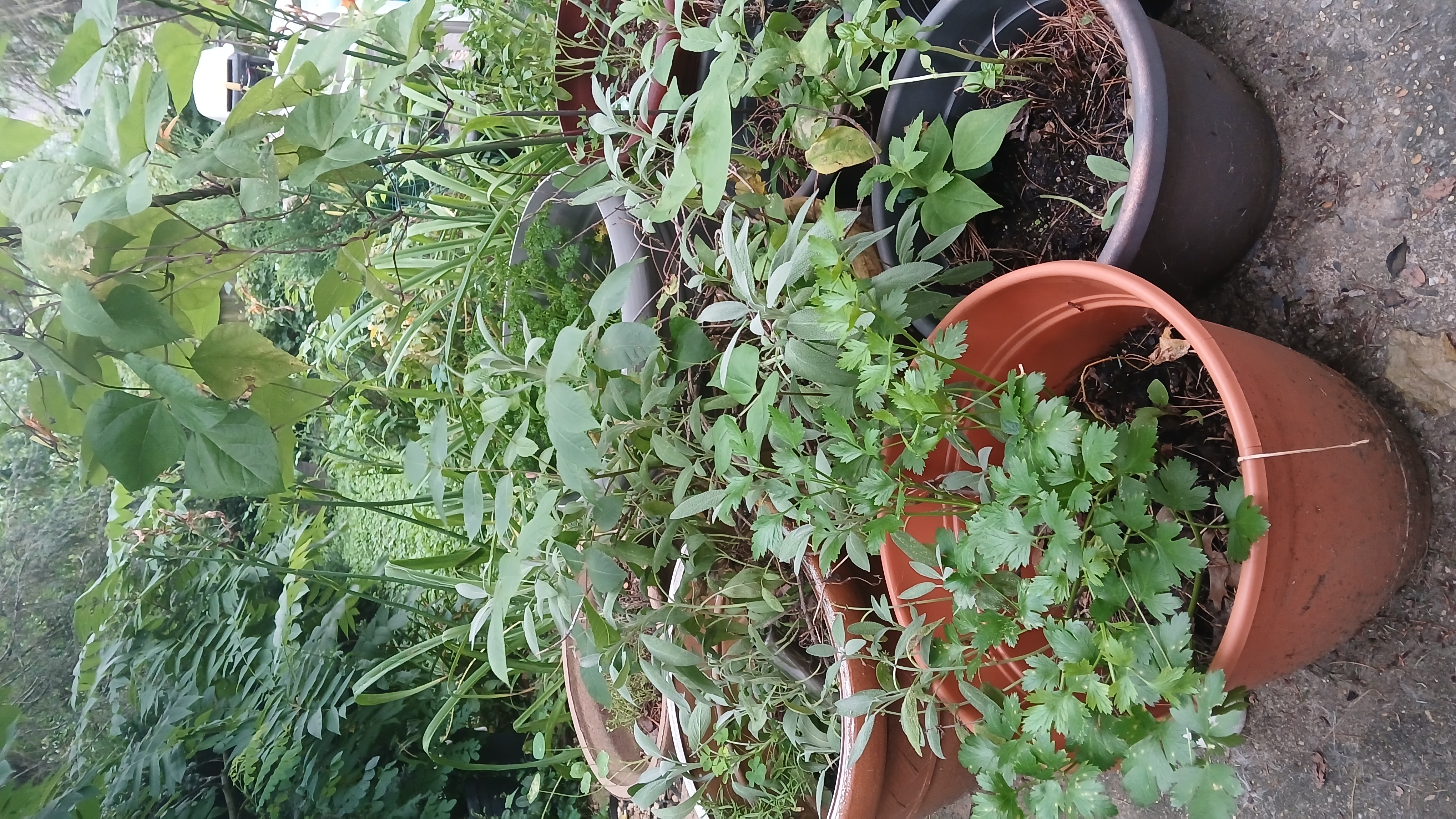
During the summer, larger pots of herbs are moved outdoors onto patios, sidewalks, and other impervious surfaces. This provides multiple benefits: it shades heat-absorbing surfaces, helping to reduce the urban heat island effect; slows stormwater runoff by intercepting rainfall; and gives the herbs full sun, maximizing their growth and food production.
Like any experiment, Living Shades continues to evolve. I encourage readers to test different plant combinations, document their results, and share improvements so the concept can continue to develop through real-world experience.
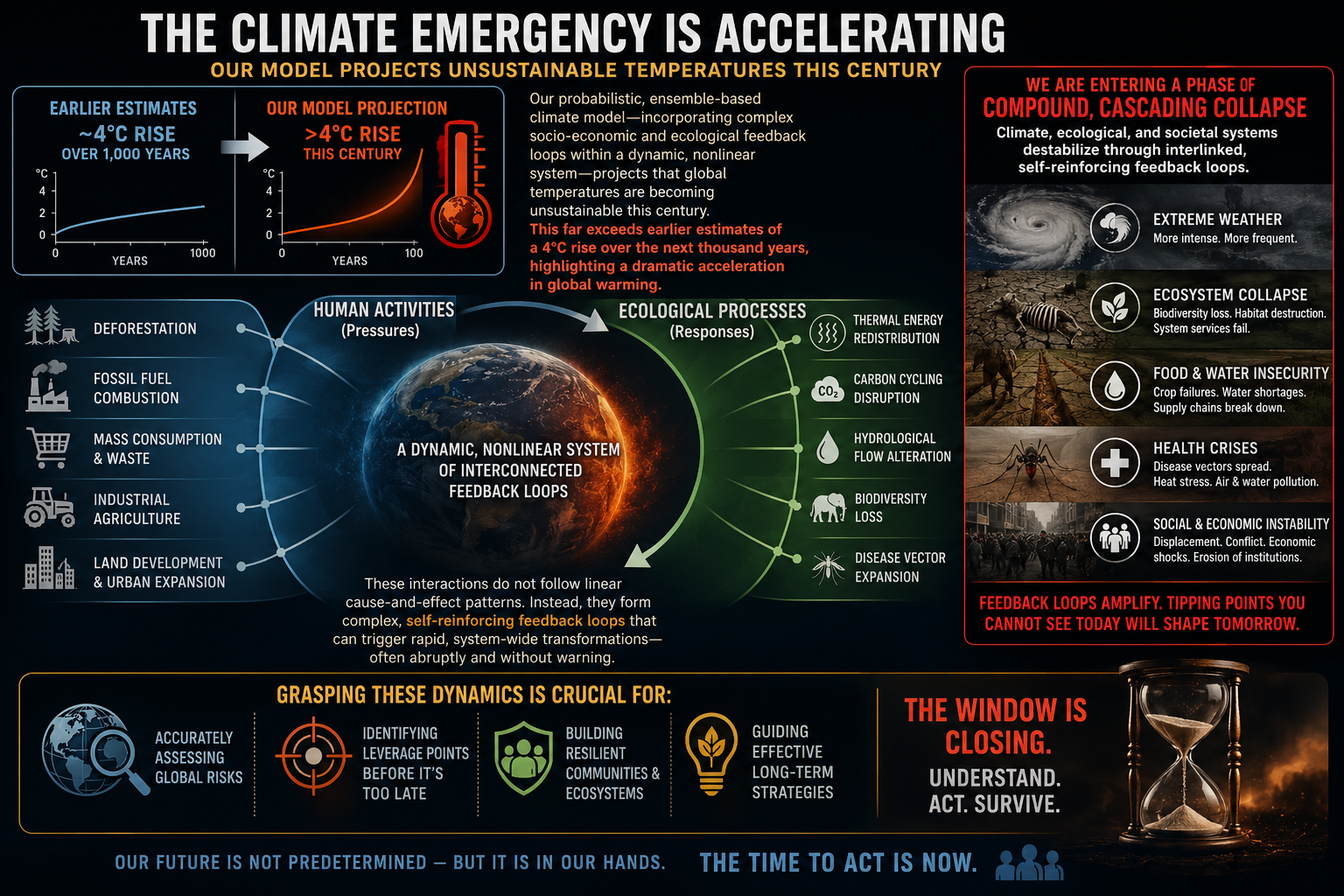
* Our probabilistic, ensemble-based climate model — which incorporates complex socio-economic and ecological feedback loops within a dynamic, nonlinear system — projects that global temperatures are becoming unsustainable this century. This far exceeds earlier estimates of a 4°C rise over the next thousand years, highlighting a dramatic acceleration in global warming. We are now entering a phase of compound, cascading collapse, where climate, ecological, and societal systems destabilize through interlinked, self-reinforcing feedback loops.
We examine how human activities — such as deforestation, fossil fuel combustion, mass consumption, industrial agriculture, and land development — interact with ecological processes like thermal energy redistribution, carbon cycling, hydrological flow, biodiversity loss, and the spread of disease vectors. These interactions do not follow linear cause-and-effect patterns. Instead, they form complex, self-reinforcing feedback loops that can trigger rapid, system-wide transformations — often abruptly and without warning. Grasping these dynamics is crucial for accurately assessing global risks and developing effective strategies for long-term survival.
Feedback Loops →
Tipping Points →
Acceleration →
Domino Effect
Feedback loops amplify climate change and can push interconnected Earth systems past critical tipping points. As tipping points are crossed, they can trigger additional feedback loops and destabilize other climate systems. This cascading "Domino Effect" compresses timescales, accelerates change, and increases the risk of rapid, nonlinear climate transformations.
Bottom line: The question is no longer how warm the planet becomes, but how life on Earth can endure when change outpaces our ability to adapt.
We cannot control the laws of physics, but we can control our pollution. The most effective action is to stop burning fossil fuels.